
Is Your Temecula Tenant Quietly Racking Up HOA Fines in Your Name?
The envelope looks harmless enough. Then you open it and see your name next to a violation you’ve never heard of.
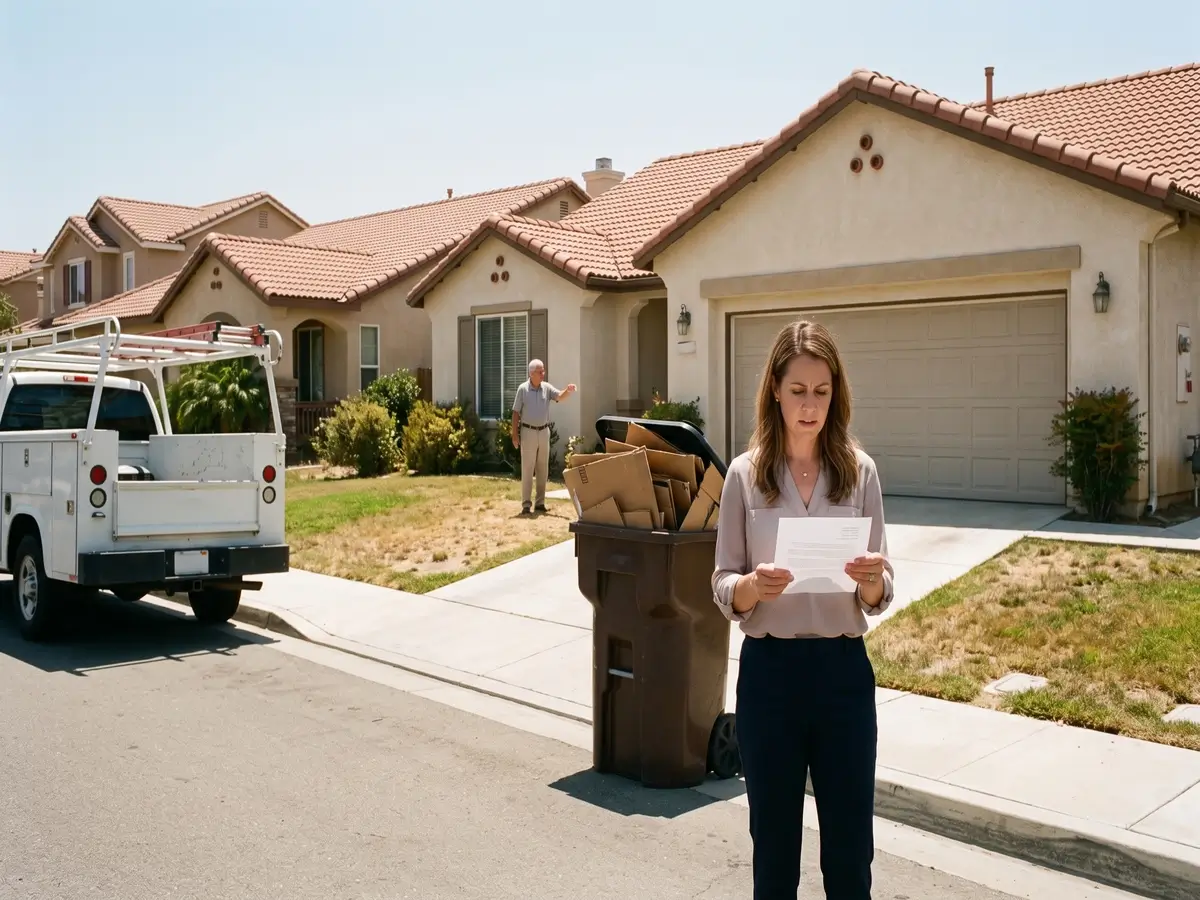
Your tenant’s work truck has been parked on the street overnight for two weeks. The trash bins haven’t made it back into the garage since last Tuesday. Nobody mentioned any of it to you, but the HOA isn’t writing to your tenant. It’s writing to you, and a hearing date is already on the calendar.
Frustrating? Absolutely. Unusual? Not at all. Before you call the board or your tenant, it helps to know where you stand.
This guide covers what California law allows an HOA to restrict, how tenant violations move through the enforcement process, and who really pays when the fine arrives.
Key Takeaways
HOAs can limit rentals, but only so far: California Civil Code Section 4741 bars associations from prohibiting or unreasonably restricting long-term rentals.
The owner is the HOA's point of contact: Associations enforce rules against members, so tenant violations are typically charged to the owner's account first.
Fines now have a statutory ceiling: Since July 1, 2025, most HOA fines in California are capped at $100 per violation, with no late charges or interest added.
Your lease determines who ultimately pays: a clear HOA addendum allows an owner to recover fines caused by a tenant's conduct.
Temecula HOA Rentals at a Glance |
$100: Maximum fine per violation for most California HOA rule violations since July 1, 2025 |
25%: Lowest rental cap an HOA may set under Civil Code Section 4741 |
30 days: Rentals of this length or shorter can be banned by an HOA |
14 days: Deadline for the board's written decision after a disciplinary hearing |
$1,000: Maximum civil penalty for an HOA that willfully violates Section 4741 |
IN THIS GUIDE
How Temecula HOAs Can and Can't Restrict Your Rental
When Your Tenant Breaks an HOA Rule
Who Pays the Fine When a Tenant Causes It?
Building an HOA-Ready Rental System in Temecula
How Temecula HOAs Can and Can't Restrict Your Rental
Temecula has master-planned neighborhoods like Redhawk, Wolf Creek, Harveston, and Paseo del Sol, so many rental homes here sit within an association with its own CC&Rs.
What California Law Allows Associations to Limit
Under Civil Code Section 4741, added by AB 3182 and effective January 1, 2021, an HOA cannot prohibit or unreasonably restrict rentals in its community. Associations can still cap rentals, but the cap cannot be set below 25% of the homes in the development.
Associations may also ban short-term rentals of 30 days or less. An HOA that willfully violates Section 4741 can be held liable for actual damages plus a civil penalty of up to $1,000.
Leasing Rules You'll Still Find in Your CC&Rs
Most associations keep reasonable leasing requirements in their CC&Rs. Common examples include submitting a copy of the lease, providing tenants' names and vehicle information, and requiring tenants to follow all community rules.
Some CC&Rs also set minimum lease terms longer than 30 days. Whether a longer minimum holds up depends on the specific wording, so reviewing the documents before you list is the safer move.
How Rental Caps Can Delay Your Listing
If your community has reached its rental cap, you may be placed on a waitlist before you can lease. Civil Code Section 4740 also protects owners who already owned their home when a new rental restriction was adopted, generally until the property changes hands.
Knowing these rules upfront keeps your vacancy plan realistic and your listing date on track.
When Your Tenant Breaks an HOA Rule
Most tenant violations are minor and fixable, but the enforcement process follows a schedule that does not wait for anyone.
The Violations That Show Up Most Often
In Temecula communities, these are the issues that tend to trigger notices:
Parking: Overnight street parking, oversized work trucks, and RVs or trailers stored in driveways.
Trash and bins: Containers left visible from the street outside collection days.
Pets: Off-leash dogs, unapproved breeds, or uncollected waste in common areas.
Amenities: Pool guest limits, clubhouse rules, and noise during quiet hours.
Yard care: Brown lawns or overgrown landscaping, which matters more in hot Temecula summers.
How California's Enforcement Process Works
Before an association can impose a fine, it must give the member written notice and an opportunity to appear at a board hearing. AB 130 amended Civil Code Sections 5850 and 5855, effective July 1, 2025, adding important protections for owners.
If you cure the violation before the hearing, the association cannot take disciplinary action. When a hearing does take place, the board must issue its written decision within 14 days.
This cure window is your best friend, because a fast response often prevents a fine from ever being issued. Each enforcement step targets the owner, which is why the owner needs a plan.
In an HOA rental, speed is the cheapest form of protection an owner has.
Who Pays the Fine When a Tenant Causes It?
The short answer is that the HOA bills you, and your lease determines whether you get that money back.
Why the HOA Holds the Owner Responsible
Your tenant is not a member of the association, so the HOA considers you the owner of record. Fines appear on your account, notices are sent to your mailing address, and hearings are scheduled for you.
What the $100 Fine Cap Changed
Under Civil Code Section 5850, most fines are now limited to $100 per violation, or less if the association's fine schedule allows it.
A higher fine is allowed only when the violation may adversely affect the health or safety of the common area or another member's property. The board must make that finding in writing at an open meeting.
Associations also cannot add late charges or interest to fines. Smaller fines are welcome news, but repeated violations can still add up and strain your relationship with the board.
Passing the Cost Back to Your Tenant
A well-written HOA addendum makes the tenant responsible for reimbursing fines resulting from their own conduct or that of their guests. Reimbursement should follow the lease terms and California's deposit rules, not assumptions made after the fact.
Clear lease terms and accurate financial reporting turn an HOA fine from your expense into a recoverable cost.
Building an HOA-Ready Rental System in Temecula
The best defense against fines is a system that prevents violations before anyone ever writes a courtesy letter.
Strong owners and managers follow a consistent routine:
Start with the governing documents: Review CC&Rs, rules, and the current fine schedule before setting rent or listing.
Register the lease: Submit required tenant and vehicle details on time so the HOA has accurate records.
Hand tenants the rules: Provide a copy of the community rules at move-in and collect a signed acknowledgment.
Screen with the community in mind: Ask about vehicles, pets, and storage needs during tenant screening.
Route notices immediately: Forward every HOA letter to the tenant the same day and track the cure deadline.
Document everything: Keep photos, emails, and inspection reports in case you need to go to a hearing.
Pairing these steps with routine maintenance services keeps yard and exterior issues from becoming violations in the first place.
FAQs about Renting Out a Temecula HOA Home
Can my Temecula HOA stop me from renting out my home?
Generally, no, because Civil Code Section 4741 prevents associations from prohibiting or unreasonably restricting long-term rentals. An HOA can still enforce a rental cap of at least 25% and ban rentals of 30 days or less.
Can the HOA fine my tenant directly?
Associations enforce rules against owners, so they typically charge the fine to your account. Your lease is what allows you to seek reimbursement from the tenant.
How much can an HOA fine me for a tenant's violation?
Since July 1, 2025, Civil Code Section 5850 caps most fines at $100 per violation. Higher amounts require a written health or safety finding by the board.
Your Tenant's Mistake Shouldn't Become Your Monthly Bill
Rules protect a community, but only a system protects the owner renting inside it.
A Temecula HOA home can be an excellent rental, as long as someone watches both the lease and the community rules. Miss either one, and a small parking issue can turn into a hearing, a fine, and a strained relationship with the board.
California has given owners stronger protections, from limits on rental bans to the $100 fine cap. Those protections help only when notices are answered quickly, tenants know the rules, and the lease clearly states who pays.
At J Street Properties Group, we manage HOA rentals across Temecula, Murrieta, and Southwest Riverside County with that exact discipline, backed by guarantees that keep us accountable. We review your CC&Rs before listing, build HOA addendums into every lease, and act on violation notices the day they arrive, before small problems reach a hearing.
Want an HOA rental that runs without surprises? Call us at 949.919.5085 or explore our Temecula property management services to see how we protect your home and cash flow.